
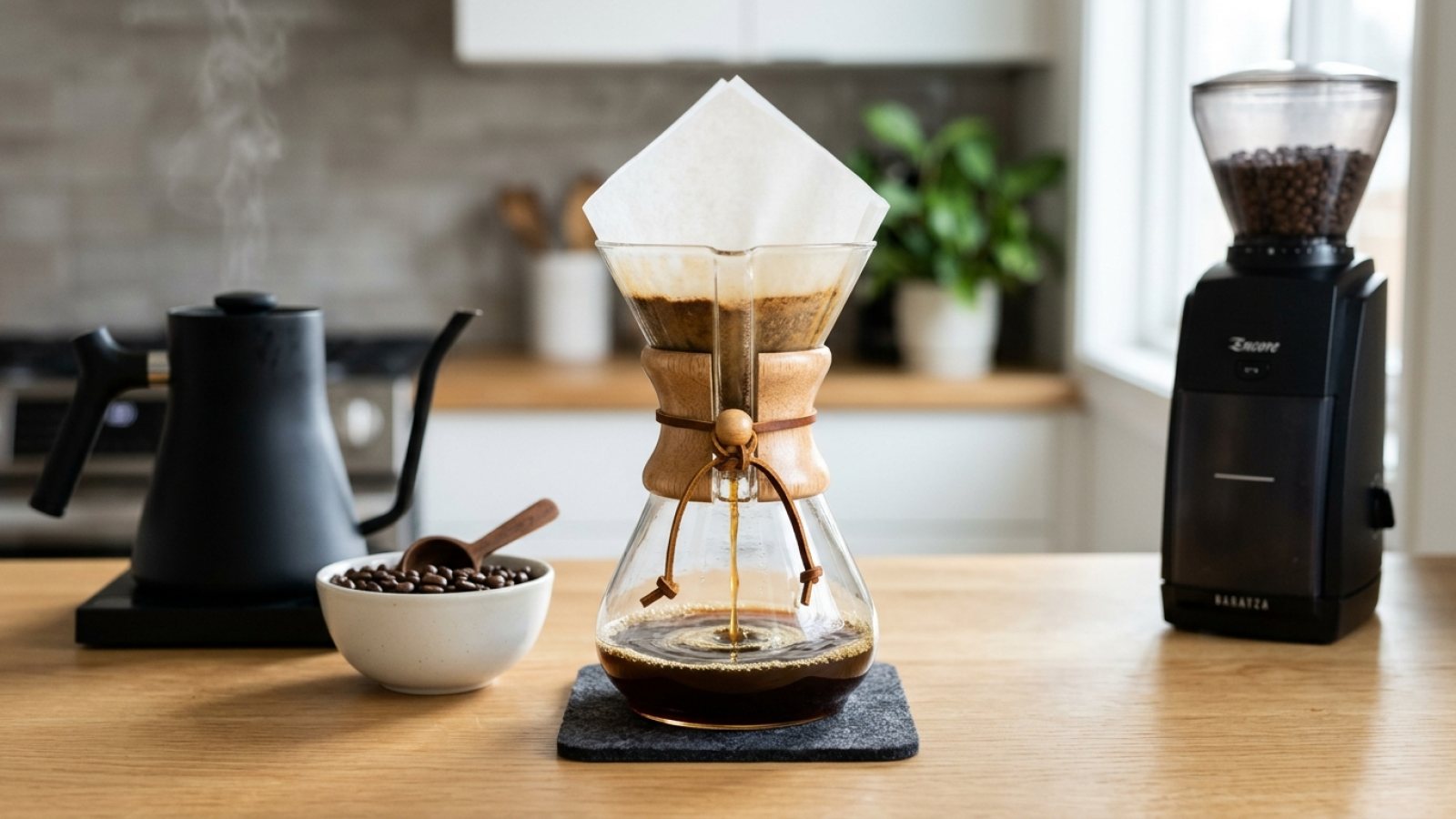
Chemex Brew Guide: Why the Thick Filter and Hourglass Shape Matter for Unrivaled Clarity
The Chemex is a declaration of intent, a pursuit of unblemished clarity. Its distinctive thick filter and hourglass shape are key to revealing the nuanced character of exceptional coffee beans.
The Chemex is not merely a coffee maker; it is a declaration of intent. You are pursuing clarity, an unblemished expression of the bean, and for that, its distinctive thick filter and hourglass shape are non-negotiable. Other brewers might offer speed or convenience, but the Chemex offers precision, demanding a ritual to unlock its true potential.
The Filter: A Barrier to Bitterness
Most pour-over filters are thin, permeable paper. The Chemex filter is different. It’s 20-30% thicker than standard paper filters, designed with a specific porosity. This isn't accidental; it's the core of its magic. The extra cellulose material traps more fine sediment and oils that other filters let pass, including diterpenes and cafestol, which contribute to perceived bitterness and can even raise cholesterol. The result is a cup devoid of grit, free from the heavy body and muddy flavors that characterize French press or even some lesser pour-overs. This heavy filtration allows light-roasted, nuanced single-origin coffees from places like Ethiopia's Yirgacheffe or Colombia's Huila region to shine, revealing delicate floral notes and bright acidity that would otherwise be obscured. To achieve this, always use genuine Chemex bonded filters; generic alternatives simply don't possess the same density or structure.
The Hourglass: Aeration and Purity
Beyond the filter, the Chemex's iconic hourglass figure serves a crucial function. Its unique design creates a distinct upper brewing chamber and a lower carafe, completely separate from the spent grounds once brewing is complete. This separation prevents over-extraction that can occur when brewed coffee sits in contact with the coffee bed, a common pitfall in single-chamber brewers. The non-porous glass construction ensures no flavor retention, preserving the integrity of each brew. The spout, an integrated air channel, allows for proper airflow during brewing, preventing vapor lock and ensuring a smooth, uninterrupted draw-down. This controlled drawdown, coupled with the filter's thickness, means a slower, more deliberate extraction. When done correctly, the coffee drips into the bottom chamber, aerating gently as it falls, ready to be poured directly. No transfer required, minimizing disturbance and maintaining temperature.
Brewing for Clarity: A Practical Guide
Achieving that signature Chemex clarity requires adherence to a specific methodology. Start with a medium-coarse grind, resembling sea salt or coarse sand—finer than French press, but coarser than an automatic drip. A Baratza Encore grinder set around 24-28 is a good starting point. Water temperature is critical: aim for 200-205°F (93-96°C). Too hot, and you risk over-extraction and bitterness; too cool, and you'll under-extract, leading to a weak, sour cup. For optimal flavor, use a ratio of 1:15 to 1:16 coffee to water. For example, 40 grams of coffee to 600 grams of water for a larger brew.
Place your folded Chemex filter into the cone with the triple-layered side against the pouring spout. Rinse it thoroughly with hot water to eliminate any paper taste and preheat the vessel. Discard the rinse water completely. Add your freshly ground coffee, leveling the bed. Begin with a bloom: pour 60-80 grams of water (about twice the coffee weight) in a gentle, even spiral over the grounds, ensuring all are saturated. Wait 30-45 seconds, allowing the coffee to degas. This prepares the grounds for even extraction.
After the bloom, continue pouring in concentric circles, moving from the center outwards, avoiding the filter walls. Maintain a steady, controlled stream using a gooseneck kettle, like a Fellow Stagg EKG. Aim to keep the water level consistently high over the coffee bed without letting it touch the rim. Pour in stages, allowing the water to drain slightly between additions. The total brew time, from the initial bloom to the final drip, should fall between 4 to 5 minutes. If it’s too fast, your grind is too coarse; too slow, it's too fine. Adjust accordingly for your next brew. The final cup will be clean, bright, and articulate, revealing the complex aromatics of your chosen bean.
Beyond the Brew: The Chemex Experience
The Chemex stands apart because its design elements—the ultra-thick filter and the elegant, functional hourglass—work in concert to produce a particular cup profile: clean, bright, and virtually sediment-free. It's a method for the discerning drinker who values transparency in their coffee. While it may not be the fastest brew, the deliberate process it demands contributes to its appeal. It’s an act of mindfulness, a pause in the day to craft something exceptional. For those who seek to truly taste their coffee, unburdened by distraction, the Chemex remains an indispensable tool.
