
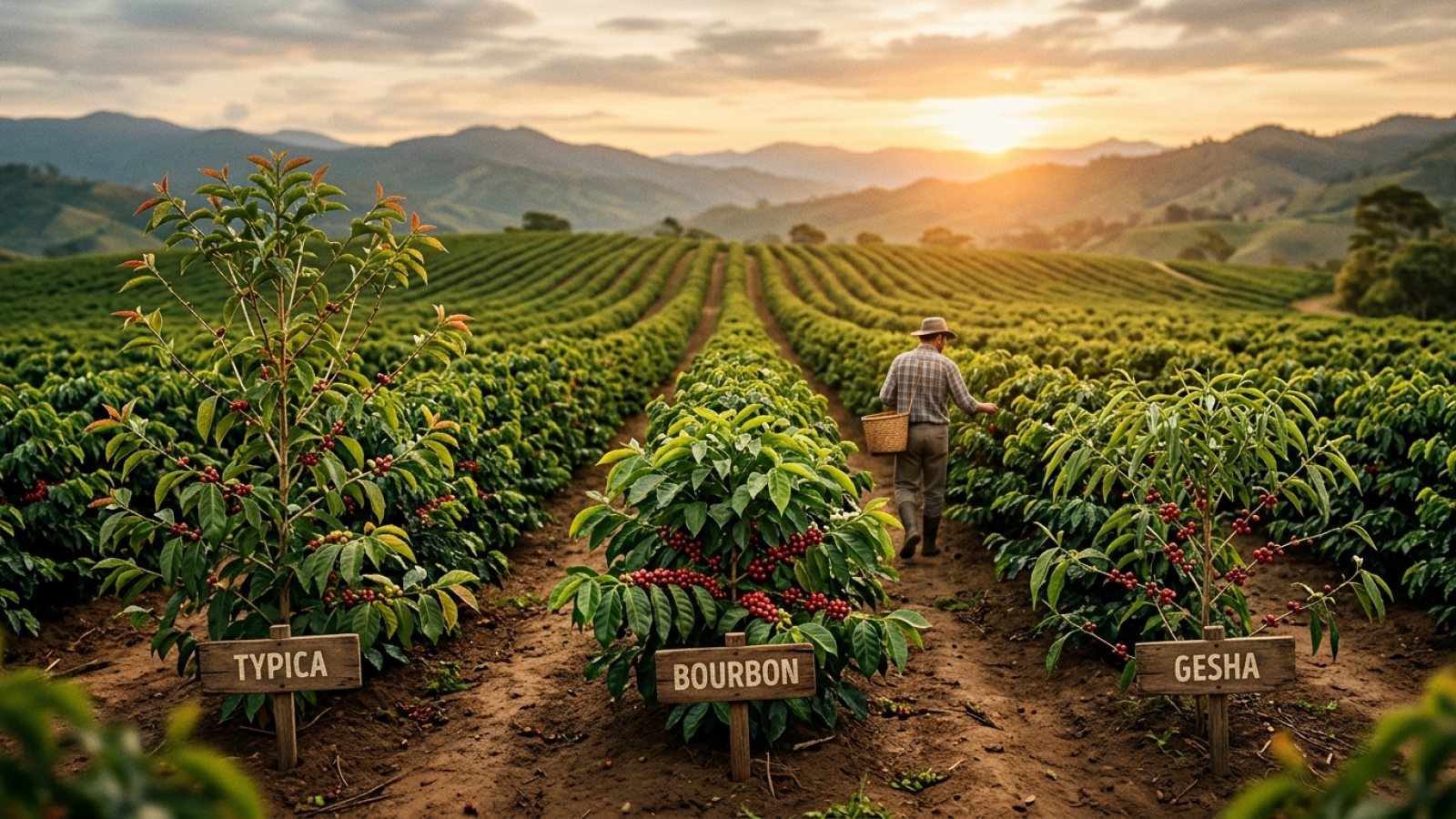
Gesha, Bourbon, Typica: Why Knowing Your Coffee Varietals Unlocks a Universe of New Tastes
Beyond roast level and origin, the varietal of a coffee plant dictates its inherent flavor potential. Understanding these genetic distinctions is key to unlocking truly exceptional cups and appreciating coffee's depth.
Focusing solely on roast level or origin misses half the story of a coffee bean. The varietal, the specific genetic subspecies of the Coffea arabica plant, is the blueprint for flavor. It dictates acidity, body, sweetness, and aromatic potential long before a cherry is picked or roasted. Ignorance of varietals means you're leaving a universe of taste on the table.
The Foundational Pillars: Typica and Bourbon
To understand coffee's genetic diversity, start with Typica. This is one of the oldest and most culturally significant varietals, tracing its lineage back to Yemen and then spreading globally via India and eventually the Dutch East Indies. Typica plants are tall, have low yields, but produce an elegantly clean cup with refined sweetness and floral notes. Expect a bright acidity balanced by a smooth body. For a pour-over, a light-roasted Typica from Sumatra, brewed at 200°F (93°C) with a 1:16 ratio on a Hario V60, will showcase its delicate structure and clarity.
Bourbon is Typica's closest genetic cousin, a natural mutation discovered on Réunion Island (formerly Île Bourbon). It's a higher-yielding varietal than Typica, which made it popular for farmers, but it also offers a distinct flavor profile. Bourbon beans typically present a more complex, buttery body with pronounced chocolate, caramel, and red fruit notes, often with a brighter, more lively acidity than Typica. A Colombian Bourbon, medium-light roasted, brewed through a Kalita Wave with a slightly finer grind (around 20 clicks on a Comandante C40) at 202°F (94°C), emphasizes its inherent sweetness and rich mouthfeel. You'll taste the difference immediately.
The Uncommon King: Gesha
Then there is Gesha, or Geisha, the varietal that redefined specialty coffee and shattered price records. Originating in Ethiopia's Gori Gesha forest, it was famously rediscovered and cultivated to perfection at Hacienda La Esmeralda in Panama. What makes Gesha extraordinary is its unparalleled aromatic complexity: pronounced jasmine, bergamot, peach, and tropical fruit notes, often with a sparkling, almost champagne-like acidity. This is not a coffee to mask with dark roasts or heavy brewing methods.
To truly appreciate a Gesha, especially one from Panama or Colombia, a light roast is mandatory. Brew it gently, preferably with a conical pour-over dripper like a Hario V60, using water around 198-200°F (92-93°C) and a precise 1:15 ratio. The grind should be medium-coarse, ensuring a total brew time around 2:45 for a 300ml cup. Focus on a slow, controlled pour, blooming for 45 seconds to extract those volatile aromatics. This careful approach extracts the delicate flavors without over-extracting bitterness, delivering a cup that justifies its premium.
Beyond the Big Three: Expanding Your Palate
Typica, Bourbon, and Gesha are just the beginning. The world of varietals includes Caturra (a dwarf Bourbon mutation), Pacamara (a hybrid of Pacas and Maragogipe known for its intense fruitiness), and the renowned SL28 and SL34 varietals from Kenya, famous for their blackcurrant and savory notes. Each offers a unique sensory experience, shaped by its genetics and adapted to specific terroirs.
Understanding varietals empowers you as a coffee drinker. It allows you to anticipate flavor profiles, appreciate the farmer's choices, and refine your brewing technique to highlight specific characteristics. The next time you buy beans, look beyond the region and the roaster's tasting notes. Ask about the varietal. Experiment. Taste the difference between an Ethiopian Heirloom and a washed Pacamara. This focused curiosity is how you elevate your daily cup from good to truly great. It is how you truly drink coffee.
