
The Ethiopian Coffee Ceremony: Three Rounds, Home Rituals, and the Birthplace of Coffee
To understand coffee, one must understand its origin: Ethiopia, where the drink is more than a beverage—it’s a communal ritual. The Buna Tetu, or coffee ceremony, is a profound expression of hospitality and tradition, typically performed three times in a single sitting.
Coffee was discovered in Ethiopia, and there, it is not merely consumed; it is honored. The Ethiopian coffee ceremony, known as Buna Tetu, is a slow, deliberate performance of hospitality and community, an invitation to pause and connect. This isn't a grab-and-go experience; it is an act of grace, typically performed three rounds in the warmth of a home, each cup holding distinct meaning.
The ceremony begins with raw, green coffee beans, often of the famed Yirgacheffe or Sidamo varietals, spread across a shallow, flat pan called a rekebot. These aren't pre-roasted beans from a commercial roaster. They are roasted fresh, over an open flame or charcoal brazier, right in front of the guests. The host, usually a woman, meticulously turns the beans until they crackle and darken, releasing oils and an intoxicating aroma. This is crucial: the smell of the roasting coffee is the ceremony's overture, a shared sensory experience passed around the room for guests to inhale. Sometimes, frankincense or other incense is burned concurrently, cleansing the air and preparing the senses for the ritual ahead.
The Raw Bean: From Hearth to Home Roaster
Once roasted to a deep, even brown, the beans are cooled, then crushed. Traditionally, this was done with a heavy mortar and pestle, yielding a fine, almost flour-like grind. Today, modern grinders may be used, but the principle remains: consistency and fineness are key for proper extraction in the jebena. The grind size is critical—finer than a standard drip grind, perhaps akin to a coarse Turkish grind, allowing for maximum surface area without over-extraction during boiling.
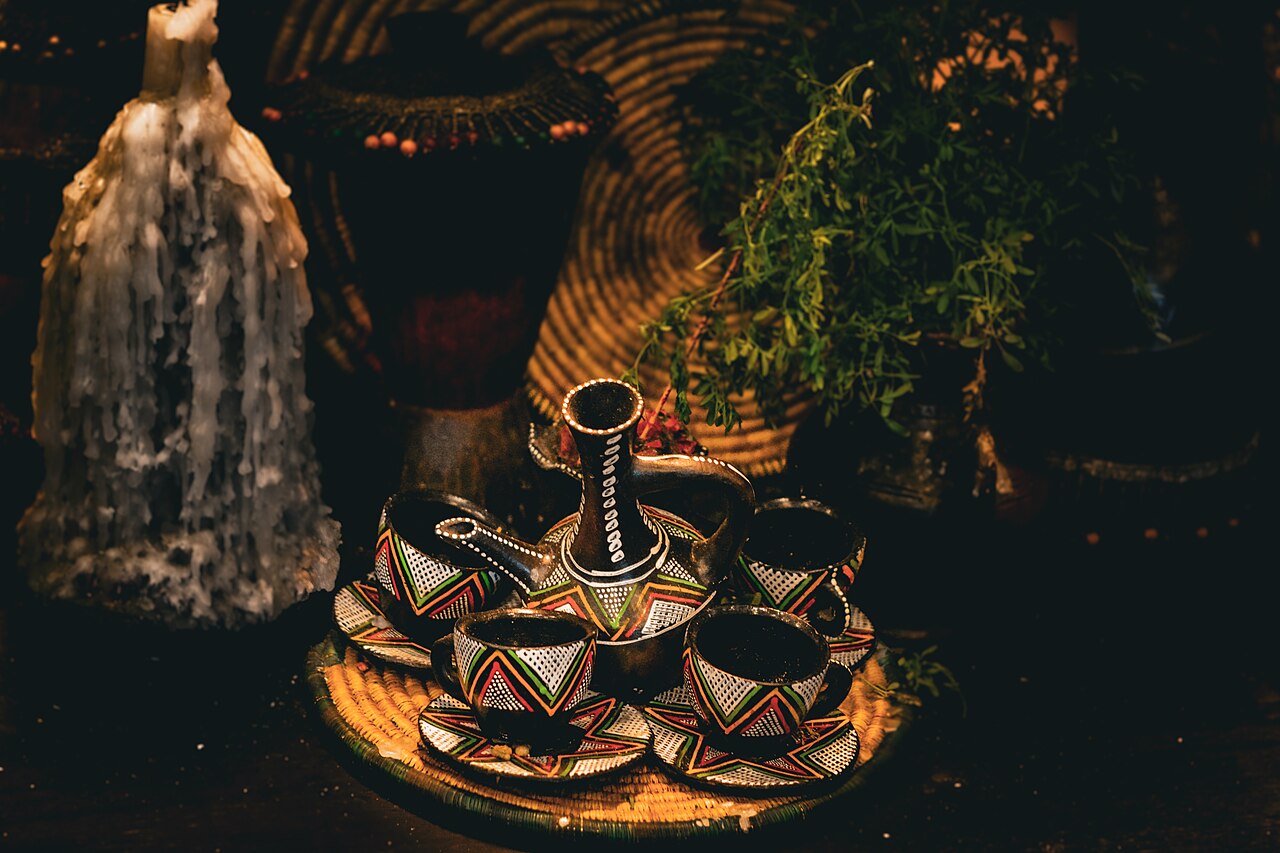
This isn't about precise water temperature control like a pour-over. It's about a sustained boil. The ground coffee is transferred to the jebena, a distinctive, hand-blown clay pot with a spherical base, a long neck, and a pouring spout. Fresh water is added, and the jebena is placed directly over the flame. The water is brought to a boil, then typically allowed to simmer for several minutes, sometimes brought to a boil a second time. This slow, gentle boiling extracts the coffee's essence, creating a rich, potent brew.
Brewing the Buna: Grind, Water, and the Jebena
When the coffee is ready, the host removes the jebena from the heat and allows the grounds to settle to the bottom for a moment. This settling ensures a clear pour. Small, handle-less cups called finjal are arranged on a tray, often alongside a small bowl of sugar and sometimes fresh rue leaves for flavoring. The host then pours the coffee in a single, continuous stream from a height, filling each finjal without breaking the flow. This act requires skill and practice, demonstrating the host's respect for the guests and the coffee.
The first round is known as Abol. This is the strongest, most concentrated brew. It is served with accompanying popcorn, traditional bread, or other light snacks. Conversation flows easily around these first cups. It’s a moment of catching up, sharing news, and solidifying bonds. The aroma, the warmth, the shared silence punctuated by sips—it’s an anchor in the day, a moment set apart.
Three Cups for Blessing: Abol, Tona, Baraka
After the Abol is consumed, more hot water is added to the same coffee grounds remaining in the jebena. The pot is returned to the flame for a second boil. This produces the second round, Tona, a slightly milder, but still flavorful, cup. The Tona round often deepens the conversation, allowing for more reflective dialogue. It’s a continuation of the gathering, but with a different intensity to the brew, mirroring the evolving nature of the interaction.
Finally, the process is repeated a third time, yielding the weakest but most symbolic cup: Baraka. The word means 'blessing,' and this final cup is believed to bestow good fortune upon those who drink it. To refuse the Baraka is considered impolite, as it's the culmination of the ceremony, the final act of hospitality. Even if the caffeine has already done its work, the Baraka is drunk for its cultural weight and the blessings it represents.
The Ethiopian coffee ceremony is not just about drinking coffee; it is about taking time. It’s about the deliberate preparation, the shared experience, and the cultural significance embedded in each of the three cups. It teaches patience, offers connection, and reminds us that some of the greatest pleasures are found in shared ritual, not hurried consumption. To truly appreciate coffee, one must first understand its home.
