
Un Caffè: The Italian Espresso Ritual Demystified
Ordering espresso in Italy is not a transaction; it is a rapid, precise, and deeply ingrained cultural ritual. Forget your to-go cup and embrace the bar experience to truly understand Italian coffee.
Ordering espresso in Italy is not about asking for coffee; it is about participating in a deeply ingrained cultural ritual. Forget the American expectation of customization, lingering, or convenience. Italians drink their coffee standing, quickly, and with an unspoken understanding of its purpose: a brief, potent jolt.
The Bar, Not the Café
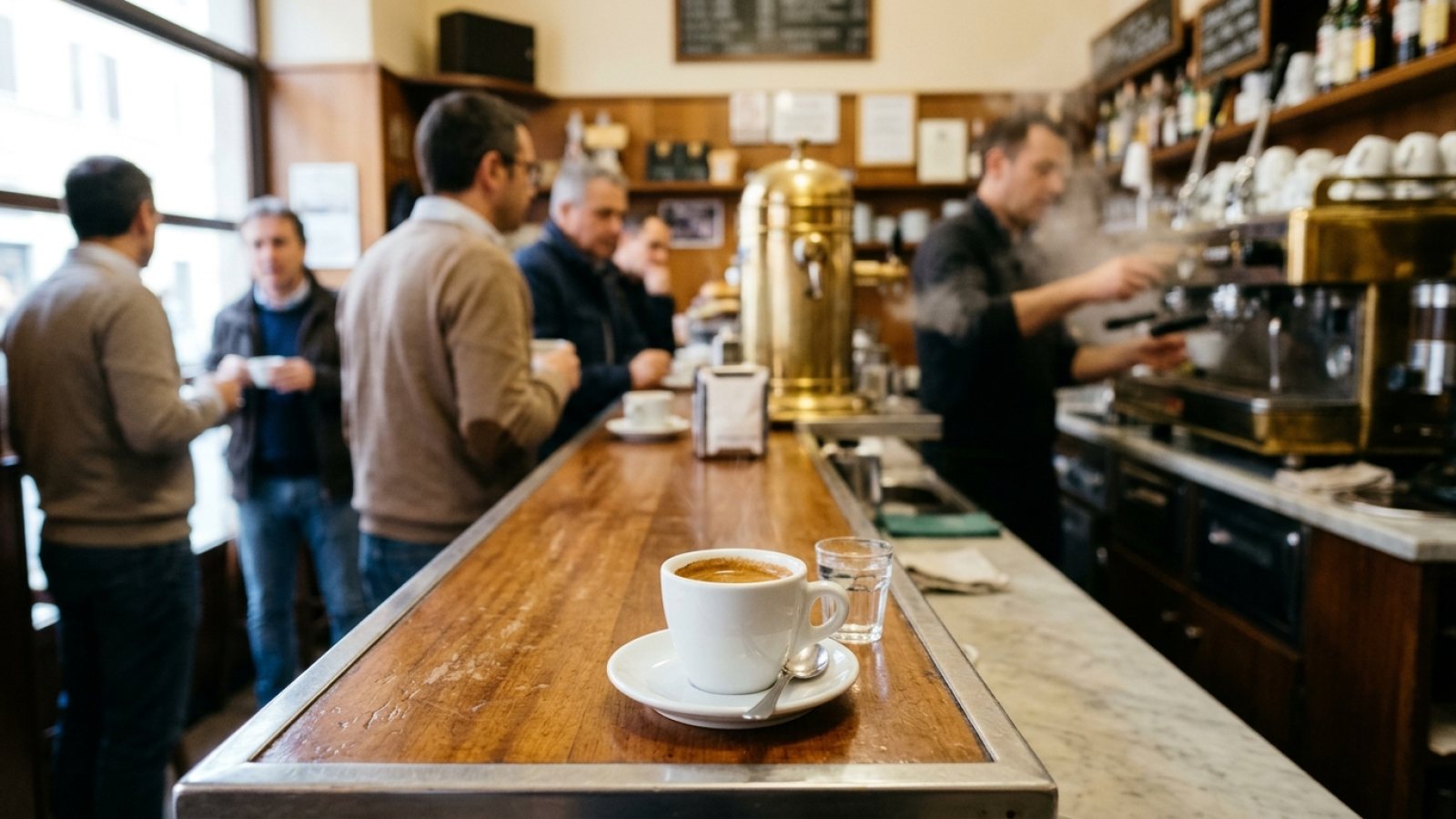
In Italy, the establishment you visit for coffee is a bar. This term might conjure images of evening drinks, but its primary function, especially in the mornings and afternoons, is to serve coffee. Patrons stand at the counter, placing their order directly with the barista. There are no lines like a drive-thru, nor the expectation of finding a cozy armchair to settle into for an hour. The pace is brisk. You order, you pay (often at a separate cash register first, then present your receipt), you receive, you drink, you leave.
This efficiency is central to the Italian coffee experience. An espresso, or caffè as it's simply called, is designed to be consumed in a few sips, maximum. It's hot, concentrated, and delivers an immediate impact. The idea of occupying a table for a single espresso is foreign; if you do sit, expect to pay a premium for the table service.
The Order: "Un Caffè, Per Favore"
Keep your order simple. Asking for an "espresso" is redundant; caffè means espresso. A typical Italian espresso is 25-30ml of liquid, extracted from 7 grams of finely ground coffee, with water at 90-95°C, under 9 bars of pressure, in precisely 25-30 seconds. The result is a shot crowned with a rich, reddish-brown crema, indicating proper extraction and fresh beans.
If you desire anything other than a straight espresso, specify: a cappuccino (never after 11 AM, and only for breakfast), a macchiato (espresso "stained" with a dollop of milk foam), or a latte macchiato (steamed milk "stained" with espresso). But for the authentic experience, stick to the caffè. There's no menu of syrups or elaborate milk preparations. The focus is the bean, the grind, the machine, and the barista's touch. Roasters like Illy or Lavazza, common across Italy, provide a consistent, dark-roasted, robust flavor profile that stands up to the high-pressure extraction.
The Ritual: Stand, Sip, Go
The core of the Italian espresso ritual is its immediacy. The espresso arrives in a pre-warmed, thick porcelain demitasse cup. This matters. Porcelain retains heat far better than glass or paper, ensuring the coffee stays at its optimal drinking temperature for its brief lifespan. The ideal temperature for sipping an espresso is around 60-70°C. A lukewarm espresso is a travesty.
You drink it standing. You stir once, perhaps adding a small packet of sugar if you prefer, then you lift the cup and take a few quick sips. The first sip should be hot, intense, and somewhat bitter, followed by the complex flavors of the roasted bean. The crema provides a textural experience, a silken layer on the palate. Finish the shot, place the cup down, and you are done. There is no lingering, no reading, no working. It is a moment of pure, unadulterated coffee consumption.
The Anathema of the To-Go Cup
This brings us to the cardinal sin: asking for a to-go cup. In Italy, a to-go cup for espresso is anathema. It disrupts the entire philosophy of the drink. A paper cup rapidly cools the espresso, ruining the temperature and the integrity of the crema. It also implies a rushed, disengaged consumption that is antithetical to the Italian reverence for food and drink. The espresso is meant to be enjoyed *now*, in that precise moment, in that specific ceramic vessel. It is a brief pause, a social punctuation mark in the day, not a fuel source to be carted around. If you ask for one, you will likely be met with confusion, perhaps even a polite but firm refusal.
Embrace the stand-and-sip. Adopt the quick, respectful interaction with your barista. Pay your single euro or so, down your shot, and continue with your day, having experienced coffee as it was truly intended.
