
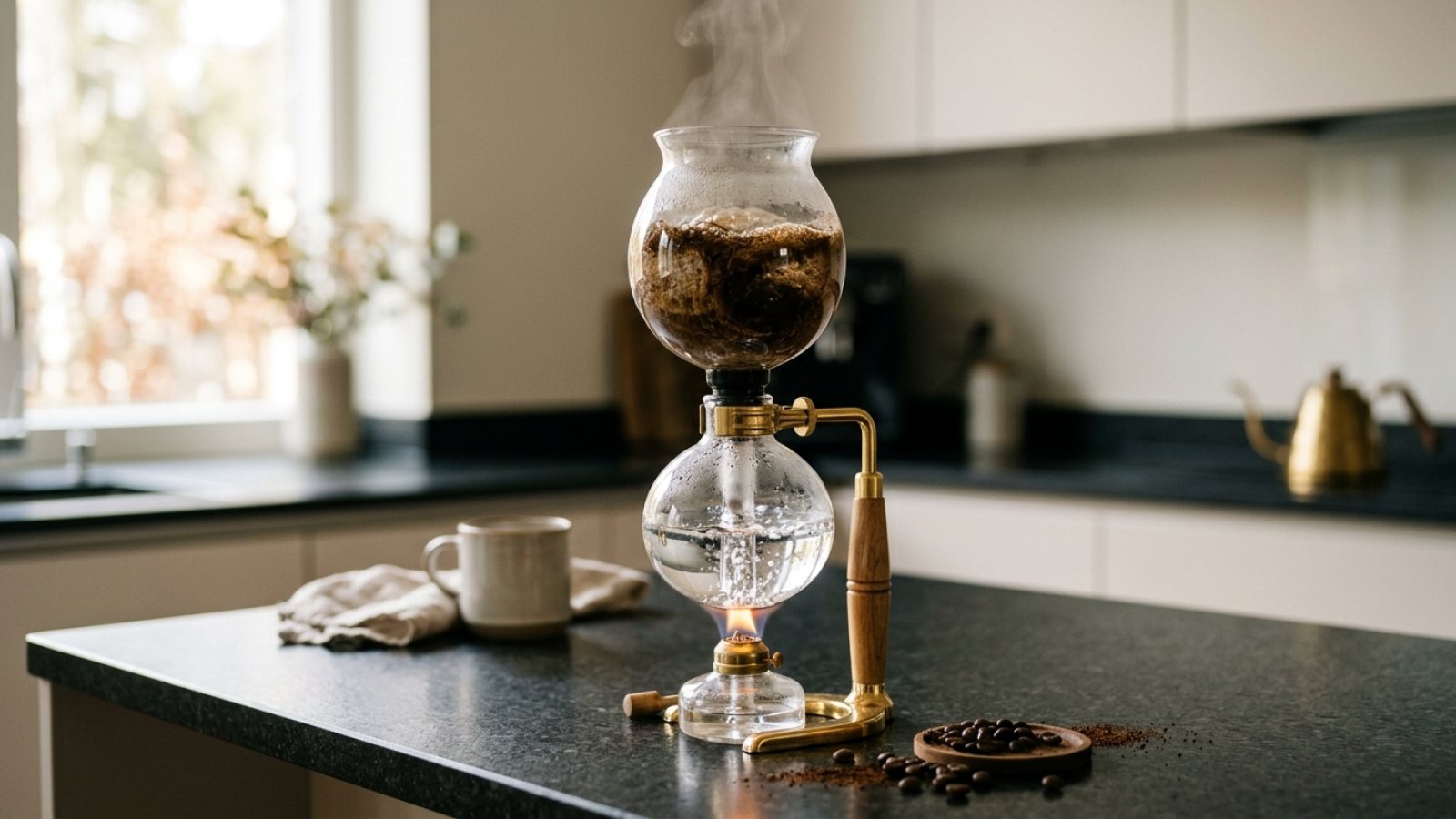
Siphon Coffee: The Pure Clarity of a Mad Scientist's Brew
Siphon coffee brewing is a spectacle, a lab experiment on your countertop. But beyond the theatrical display, it delivers a cup of unparalleled clarity and sweetness.
Siphon coffee brewing looks like an experiment, often drawing comparisons to early 20th-century chemistry labs. It is a spectacle of boiling water, rising columns of liquid, and dramatic vacuum-sealed descent. For the uninitiated, it’s coffee as theater. For those who chase clarity and purity in their cup, it’s a method that delivers like no other.
Forget the image of Jerry Lewis in The Nutty Professor, though the bubbling beakers aren't entirely dissimilar. Siphon brewing, also known as vacuum pot brewing, is a precise dance between physics and flavor. It’s not just for show; it produces a clean, vibrant coffee that highlights the nuanced notes of exceptional beans. This isn't a quick cup. It's a commitment to a process, and the reward is a brew so transparent, you'll taste details you never knew existed.
The Science Underneath the Spectacle
The magic of a siphon brewer lies in its elegant use of vapor pressure and vacuum. The setup typically involves two glass globes: a lower carafe and an upper brewing chamber, connected by a filter-fitted stem. You fill the lower chamber with water, heat it, and watch as the water is pushed upwards into the upper chamber by expanding steam. This is where the coffee grounds reside. The immersion is complete, even, and consistent.
Once the brew time is complete, you remove the heat source. The cooling lower chamber creates a vacuum, pulling the brewed coffee back down through the filter and into the carafe. This unique vacuum filtration is key. It leaves behind almost all sediment, resulting in a remarkably clean cup, free of the fines that can muddy the flavor of other immersion methods like French press.
Precision: Grind, Ratio, and Temperature
To achieve this clarity, precision is paramount. Start with a medium-fine grind, slightly coarser than espresso but finer than a typical pour-over. Think sea salt texture. Too fine, and you risk a clogged filter and over-extraction. Too coarse, and you'll get weak, underdeveloped coffee.
The coffee-to-water ratio is crucial. A good starting point is 1:15 to 1:17. For a standard 5-cup Yama siphon, using 25 grams of coffee with 400 milliliters of water is a reliable benchmark. Always use filtered water, ideally softened, to ensure the purest expression of the bean's flavor.
Water temperature is less about what you pour in, and more about the brewing environment. Pre-heat your water in the lower chamber to just off the boil (around 93-96°C / 200-205°F) before attaching the upper chamber. Once the water rises, the brewing temperature in the upper chamber will stabilize around 88-92°C (190-198°F), an ideal range for full, even extraction without bitterness. Don’t add cold water; it will shock the system and alter the thermodynamic process.
Unpacking the Siphon's Unique Taste Profile
What sets siphon coffee apart is its unparalleled clarity and sweetness. Because the coffee is fully immersed and then filtered so cleanly under vacuum, the resulting brew highlights the subtle aromatics and delicate flavors of the bean. You'll notice bright acidity and floral notes in an Ethiopian Yirgacheffe, or the complex fruitiness of a washed Colombian bean, without any lingering bitterness or muddiness.
Compared to a pour-over, siphon coffee often presents a fuller body while retaining clarity. It’s richer than an AeroPress, yet cleaner than a French press. It walks a unique line, offering a balanced cup that amplifies the intrinsic qualities of the coffee. This is why lighter-roasted, high-quality single-origin beans truly shine in a siphon. They have nowhere to hide. The process strips away anything that would obscure their true character.
The Right Gear and Refined Technique
Quality gear makes a difference. Reputable brands like Hario and Yama offer excellent glass siphon brewers, often with sturdy alcohol or butane burners. While an alcohol lamp is classic, a butane burner provides more consistent and adjustable heat. Always use a stirring paddle to ensure all grounds are fully saturated when the water first rises. Some brewers use a cloth filter, others a permanent metal or glass rod filter. Each yields slight variations; cloth offers the cleanest cup.
Technique matters: once the water is in the upper chamber and the coffee is added, give it a gentle stir to ensure all grounds are wet. Let it brew for 45 seconds to 1 minute and 30 seconds. A second gentle stir mid-brew helps maintain even extraction. Then, remove the heat source, and watch the magic unfold as the coffee descends. Swirl the lower carafe gently before pouring. The initial visual drama gives way to a final, perfect cup.
Siphon brewing isn’t for the impatient. It’s an investment of time and attention. But for those who appreciate the craft, the controlled environment, and the resulting pure, unadulterated coffee experience, it is a ritual worth mastering. The clarity in the cup is a direct reflection of the clarity in the process.
