
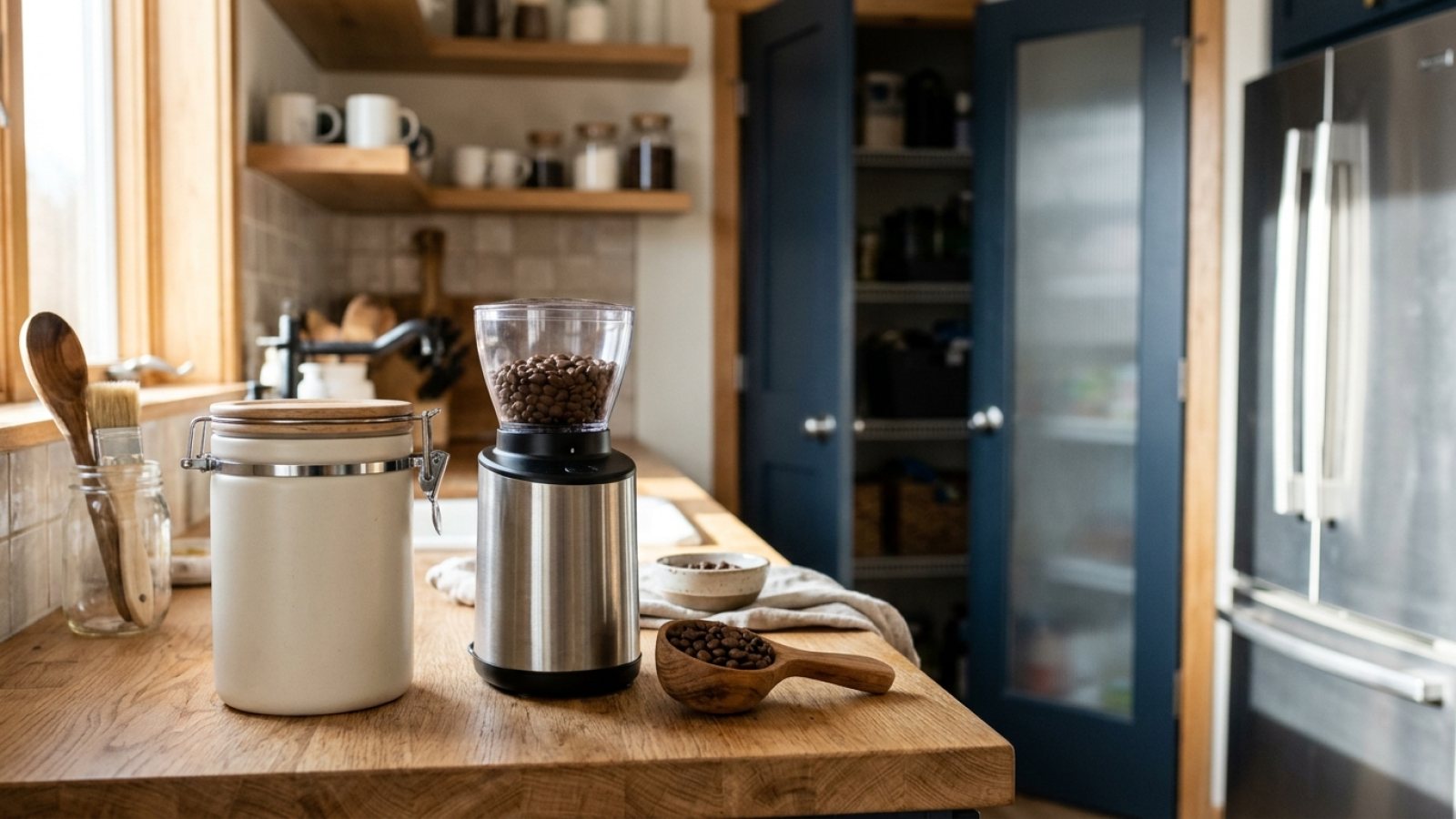
Storing Your Coffee Beans: Whole or Ground, Fridge or Freezer, and Why It Matters for Freshness
Understanding proper coffee bean storage is crucial for flavor. This guide breaks down why whole beans beat ground, and which storage locations—pantry, fridge, or freezer—actually preserve freshness.
The moment green coffee beans are roasted, they begin to die. This might sound dramatic, but it is the fundamental truth shaping every decision a serious coffee drinker makes, especially regarding storage. Freshness isn't a luxury; it's the bedrock of flavor. Every second, every breath of air, degrades the volatile compounds that make coffee worth drinking.
Whole Bean or Ground? There's No Debate.
The single most impactful decision you make for coffee freshness happens before you even brew: whole bean versus ground. Always, without exception, store your coffee as whole beans. Coffee beans are porous; once ground, their surface area explodes, exposing countless flavor molecules to oxygen. This accelerates oxidation dramatically, stripping away aromatic oils and replacing them with stale, bitter notes. Consider a delicate, light-roasted Ethiopian Yirgacheffe; grinding it hours before brewing reduces its bright, floral complexity to mere brown water. A burr grinder, not a blade grinder, is essential here, providing a consistent grind size for optimal extraction. Grind only what you need, immediately before you brew. Any professional roaster, from Intelligentsia in Chicago to Square Mile in London, designs their bags for whole bean storage because they know the clock starts ticking the moment those beans are ground.
The Four Horsemen of Stale Coffee
Four primary factors attack your coffee’s integrity: oxygen, light, heat, and moisture. Oxygen causes oxidation, breaking down fats and aromatics into undesirable compounds. Light, especially UV light, degrades oils and accelerates staling. Heat rapidly catalyzes chemical reactions, evaporating volatile compounds and making your coffee taste flat. Moisture is insidious; it can lead to mold, encourage stale aromas, and even transfer unwanted flavors. This is why good coffee packaging is always opaque and often includes a one-way valve to allow degassing while preventing oxygen ingress. Once opened, the best solution is an opaque, airtight container, ideally ceramic or stainless steel, stored in a dark pantry.
The Pantry: Your Daily Sanctuary
For daily use, the pantry is your coffee’s best friend. A dark, cool, dry cupboard, away from heat sources like ovens or direct sunlight, provides the ideal environment for opened whole beans. An opaque, airtight container is non-negotiable. Glass jars, even those with good seals, are problematic if they allow light through. Stick to a quality ceramic or stainless steel canister. Aim to consume your opened bag of beans within two weeks, maximum. This is the optimal window where the complex flavors of a freshly roasted coffee, say a robust Brazilian Cerrado or a nuanced Colombian Supremo, will truly shine in your espresso machine or pour-over setup.
The Fridge: A Betrayal of Flavor
Let's be unequivocally clear: never store your coffee beans, whole or ground, in the refrigerator. This is a common but catastrophic mistake. A refrigerator is a humid, odor-filled environment. Coffee, being highly hygroscopic, will readily absorb moisture, leading to condensation on the beans and a rapid degradation of flavor. Worse, it will pick up every lingering smell from your leftover lasagna to that forgotten onion. The subtle acidity and chocolaty notes of your favorite espresso blend will be replaced by a muddled, fridge-scented mess. Your coffee deserves better.
The Freezer: A Long-Term Solution, With Caveats
The freezer presents a more nuanced storage option, but only for long-term preservation of unopened, whole beans. If you buy a larger quantity of specialty beans—perhaps a rare Gesha or a unique seasonal blend—and want to preserve its peak freshness for months, the freezer can work. The key is to minimize temperature fluctuations and condensation.
Here's the method:
- Package properly: Ideally, store coffee in its original, unopened, vacuum-sealed bag with a one-way valve. If not, vacuum-seal smaller portions of whole beans in heavy-duty freezer bags or airtight containers.
- Freeze once: Place the sealed package directly into the freezer.
- Thaw properly: When ready to use, remove the entire sealed package from the freezer and allow it to come to room temperature before opening. This prevents condensation from forming on the beans. Do not open the bag until the beans have fully acclimated.
- Use it all: Once thawed and opened, treat these beans like fresh pantry beans and consume them within two weeks. Do not refreeze. This method is not for your daily supply; it is for preserving a special lot or extending the life of a larger bulk purchase. Freezing ground coffee is generally ineffective due to its vast surface area and rapid degradation even at low temperatures.
The pursuit of great coffee is a relentless battle against entropy. Every decision, from bean origin to brew temperature, contributes to the final cup. Proper storage is not a minor detail; it is a foundational step in respecting the bean and unlocking its full potential. Prioritize whole beans, an airtight opaque container, and a cool, dark pantry. Your palate will thank you.
