
Turkish Cezve: The Three-Boil Method's Unmatched Intensity
Turkish coffee, brewed in a cezve, offers a profound experience distinct from any other method. The traditional three-boil technique isn't just ritual; it's the key to unlocking an unparalleled body and depth of flavor.
Turkish coffee is not just a beverage; it is an experience, a ritual, and a foundational pillar of coffee culture that predates nearly every other brewing method we know. To truly understand its depth, one must master the three-boil method. This isn't an arbitrary tradition; it's a precise technique that coaxes a unique texture and flavor profile from the grounds, a cup that cannot be replicated by any other means.
Forget filters, forget pressure. Turkish coffee thrives on direct contact and controlled thermal shock. The resulting brew is thick, potent, and crowned with a dense layer of foam, known as *köpük*. This foam isn't just aesthetic; it's a signature of proper preparation, trapping aromatics and signaling a perfectly developed cup.
The Grind: Finer Than Fine
The foundation of exceptional Turkish coffee begins with an impossibly fine grind. We're talking flour-fine, dust-fine—finer than espresso, finer than anything you'd achieve with a standard burr grinder set to its most aggressive setting. This isn't negotiable. The extreme surface area allows for maximum extraction in a very short, intense period, as the coffee remains suspended in the liquid during brewing and serving.
For equipment, a traditional manual Turkish coffee grinder, like those from Soy or Fakir, will deliver the necessary consistency. Electric grinders often fall short, producing uneven particles that lead to over-extraction of fines and under-extraction of coarser bits. Your water should be cold and fresh. A good ratio is typically one part coffee to ten parts water. For a single serving in a standard 60ml demitasse cup, that's roughly 7 grams of coffee (one heaped teaspoon) to 70ml of water. If you take sugar, add it now, before heating. Stir once, gently, just to incorporate the grounds.
The Ritual of the Three Boils
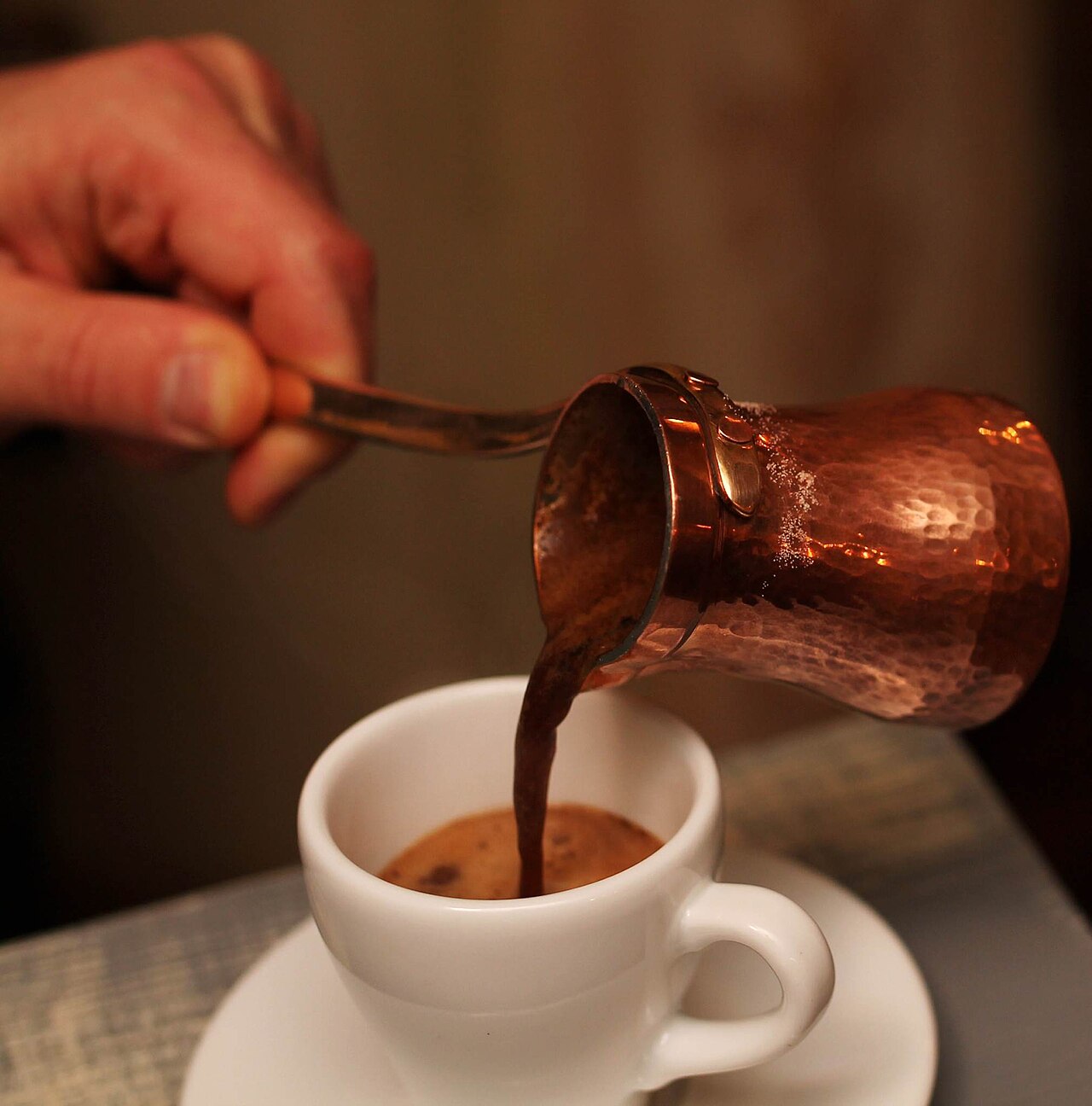
The cezve itself is critical. A solid copper cezve with a narrow neck and wide base is ideal, its excellent thermal conductivity allowing for rapid, precise temperature changes. Place your cezve, filled with the coffee-water-sugar mixture, over medium-low heat. Do not stir again. Your goal is to watch, not agitate.
The first boil is where the magic begins. As the coffee slowly heats, a dark, rich foam will begin to rise. This is the *köpük*. Just as it threatens to boil over, remove the cezve from the heat. Let it settle for 15-20 seconds. This initial heat-and-cool cycle begins the flavor development and sets the stage for the distinctive body. Some of the foam can be spooned directly into your demitasse cups at this point, ensuring each cup gets its share of the precious crema.
Return the cezve to the heat. The second boil builds on the first, deepening the flavor and enhancing the body. Watch closely again. As the foam rises a second time, remove it once more, letting it rest for another 15-20 seconds. This second phase of thermal cycling further extracts the solids and oils, thickening the coffee and concentrating its aromas. It ensures that the coffee’s full potential is realized, not merely rushed.
Finally, for the third boil, return the cezve to the heat for a final, brief ascent. This last boil is crucial for integrating all the extracted compounds and achieving that characteristic syrupy consistency. As soon as it rises for the third time, remove it immediately and pour slowly into your demitasse cups. The slow pour helps preserve the *köpük* and allows the grounds to settle at the bottom.
An Unmistakable Result
What you get after this patient, three-boil method is a cup unlike any other. The body is exceptionally full, almost velvety, with an intense, concentrated flavor that speaks directly to the origin of the beans—often a robust, medium-dark roasted Arabica, like a blend from Brazil or Ethiopia, tailored for intensity rather than brightness. The *köpük* is thick and persistent, a testament to proper extraction and controlled heating.
Unlike espresso, which uses pressure to extract, or a pour-over, which filters out all solids, Turkish coffee presents itself with its finely ground particulate matter still suspended, settling slowly to the bottom of the cup. This is not a flaw; it is an integral part of the experience, contributing to the coffee's unique texture and providing the canvas for centuries-old fortune-telling traditions once the cup is finished and inverted. The three-boil method isn't just about brewing coffee; it's about respecting a lineage of flavor, technique, and cultural significance. Master it, and you'll possess a method for a truly unparalleled cup.
