
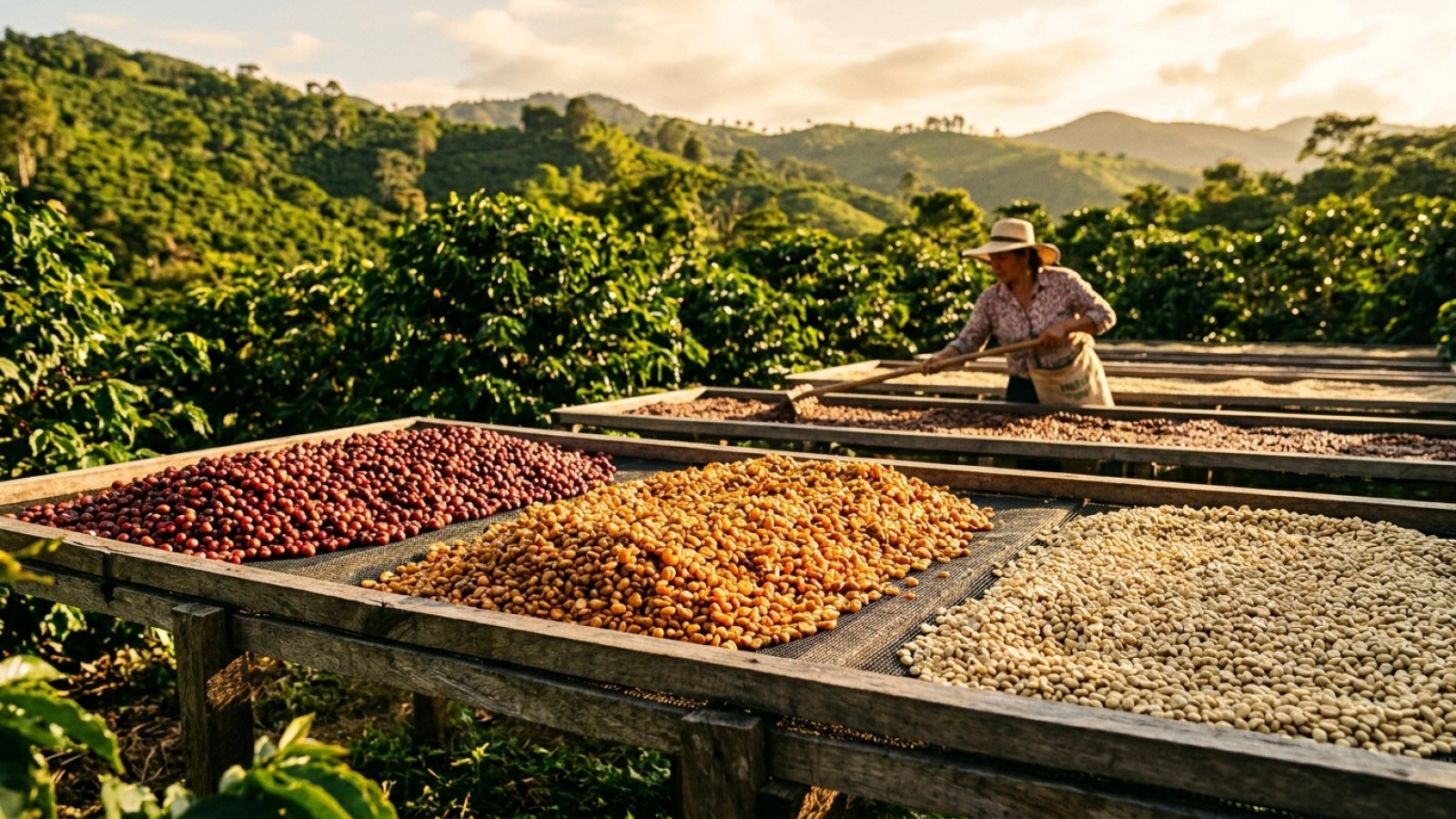
Washed, Natural, Honey: How Coffee's Processing Shapes Your Cup
The journey from coffee cherry to dried bean fundamentally alters its flavor. Understanding washed, natural, and honey processes unlocks a new dimension in your daily brew.
The flavor of your morning coffee is not solely determined by its origin or roast level. Long before the bean ever sees a roaster, its journey from cherry on the branch to dried green seed significantly impacts the final taste. Three primary processing methods—washed, natural, and honey—each impart distinct characteristics, fundamentally shaping the acidity, body, and sweetness in your cup.
The Washed Way: Precision and Purity
The washed, or wet, process is celebrated for its clean, bright, and nuanced flavor profile. Immediately after harvest, the coffee cherries are depulped, mechanically stripping away the outer skin and most of the fruit flesh. The beans, still encased in a sticky mucilage layer, are then submerged in fermentation tanks, typically for 12 to 72 hours. This fermentation breaks down the mucilage, which is then thoroughly washed away with water. Finally, the beans are dried, either on patios, raised beds, or in mechanical dryers, until they reach optimal moisture content.
This method, common in regions with abundant water like Colombia, Kenya, and Ethiopia's Yirgacheffe region, is labor-intensive and water-demanding. The result is a coffee that showcases its inherent terroir with remarkable clarity: crisp acidity, a lighter body, and distinct floral or citrus notes. A washed Ethiopian heirloom, for instance, brewed as a pour-over in a Hario V60 with water at 203°F and a medium-fine grind (like table salt) at a 1:16 ratio, will reveal intricate bergamot and jasmine notes that no other process can deliver with such precision.
The Natural Route: Boldness and Sweetness
The natural, or dry, process is the oldest method, requiring no water for mucilage removal. After harvest, the entire coffee cherry is laid out to dry in the sun, often on patios or raised beds, for several weeks. During this period, the fruit dries around the bean, and the sugars from the fruit penetrate the seed. The cherries are regularly raked to ensure even drying and prevent mold. Once fully dried, the outer husk and dried fruit are mechanically removed.
Predominant in arid regions like Brazil, Yemen, and Ethiopia's Harrar region, natural processing yields a coffee with pronounced fruitiness, a heavy body, and often a syrupy sweetness. Expect notes of berries, tropical fruit, or even a wine-like complexity. While sometimes less consistent than washed coffees due to the inherent variables of drying fruit, a well-executed natural process delivers an unforgettable cup. For a natural Brazilian Yellow Bourbon, try a French press with a coarse grind and water at 198°F, using a 1:14 ratio. The extended immersion time enhances the creamy body and amplifies its chocolate and stewed fruit notes, creating a rich, decadent experience.
The Honey Method: A Sweet Middle Ground
The honey process, often associated with Costa Rica and El Salvador, is a hybrid, blending elements of both washed and natural methods to achieve a balanced flavor profile. After depulping, some or all of the mucilage is left intact on the bean, which is then dried, much like natural processed coffee. The term “honey” refers not to honey flavor, but to the sticky, honey-like feel of the mucilage during drying. This method is often categorized by the amount of mucilage left: Yellow Honey (least mucilage, faster drying), Red Honey, and Black Honey (most mucilage, longest drying time, darkest color).
Honey processed coffees offer a unique bridge, balancing the clarity of a washed coffee with some of the sweetness and body of a natural. They typically feature medium acidity, a silky body, and distinct notes of caramel, stone fruit, or brown sugar. A Costa Rican Red Honey, prepared as an AeroPress inverted brew with a medium-fine grind, water at 200°F, and a short 30-second steep with a 1:15 ratio, will highlight its sweet apple and nutty undertones without sacrificing a clean finish. The meticulous control involved in honey processing allows for a wide spectrum of flavor experimentation, often resulting in incredibly complex and rewarding cups.
Your Cup, Your Choice: Tailoring the Brew
Understanding these processing methods is crucial for mastering your coffee brewing. A washed coffee excels in methods that emphasize clarity, like pour-over, where its delicate aromatics can shine without being overwhelmed. Natural processed beans, with their bolder, fruitier profiles, often thrive in full-immersion methods like French press or espresso, which accentuate their body and sweetness. Honey processed coffees, being versatile, can adapt well to various methods, offering a balanced presentation of their unique attributes.
Next time you select a bag of beans, look beyond the origin. The processing method listed is a critical indicator of the flavors you can expect. Experiment. Try a washed Ethiopian next to a natural Ethiopian to truly grasp the impact. Adjust your grind, water temperature, and ratio to unlock the full potential of each process. This understanding elevates daily brewing from a routine to a deliberate craft, bringing you closer to the true essence of coffee.
