
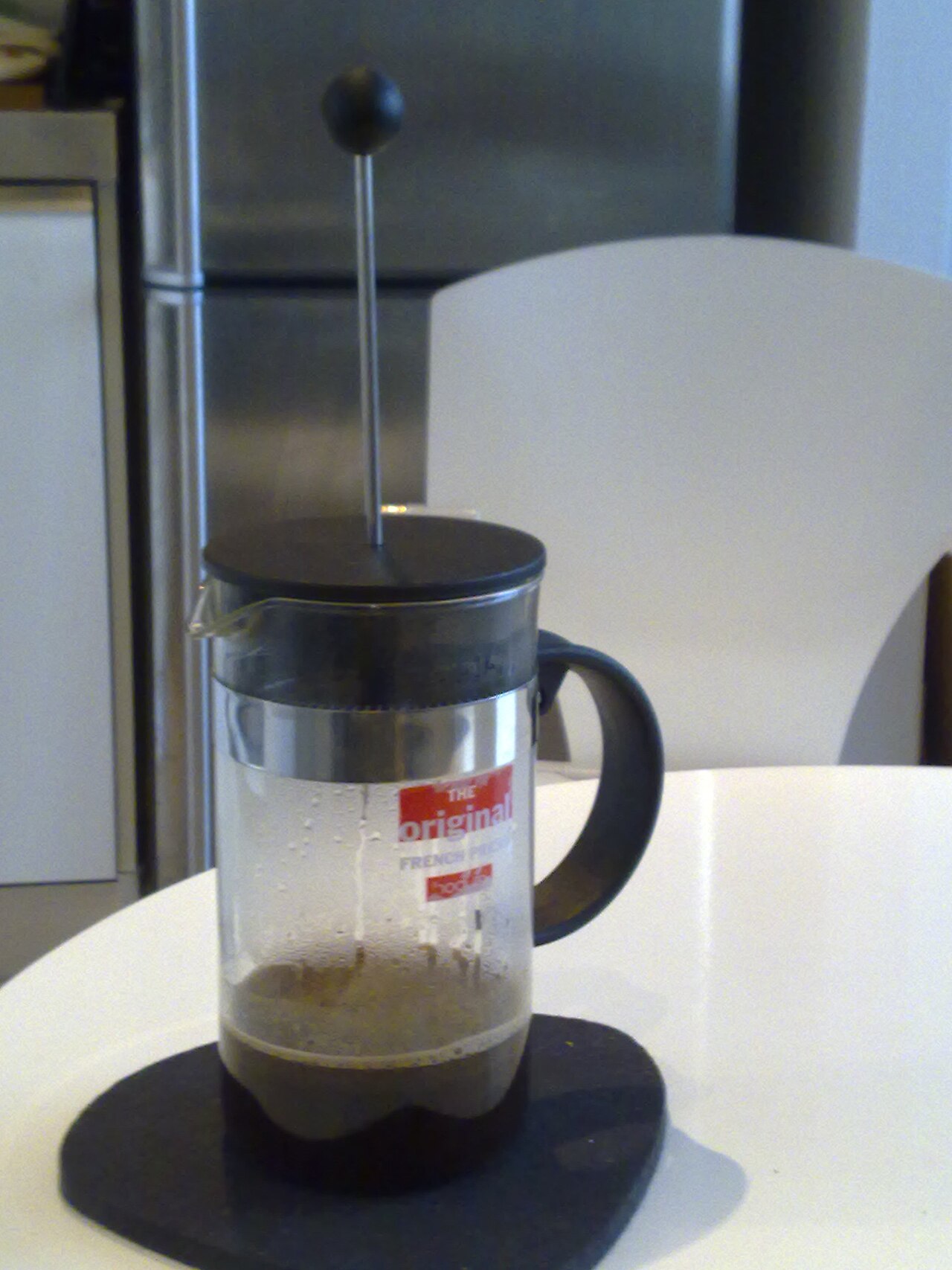
The French press promises a rich, full-bodied cup. For many, it delivers a muddy, bitter disappointment. The culprit is not the method itself, but a widespread misunderstanding of its core principle: immersion brewing. Specifically, most people break the unwritten '4-minute rule' without ever knowing they're doing it.
The Extraction Never Stops
Unlike pour-over or espresso, the French press is a full-immersion method. This means coffee grounds are in constant contact with hot water for the entire brew cycle. When people talk about the '4-minute rule,' they usually mean the duration before pressing the plunger. But the critical error is believing that pressing the plunger *stops* extraction.
It doesn't. The mesh filter of a French press, no matter how fine, merely separates the bulk of the grounds from the liquid. It does not create a clean separation. A significant amount of fine particulates and the remaining large grounds continue to steep, albeit at a slower rate, as long as they remain in the same vessel. This is where the bitterness and astringency creep in. That second cup, poured ten minutes after the first, is inevitably harsher, more opaque, and less vibrant than it should be.
Precision in a Simple Device
Achieving a truly excellent French press cup requires attention to detail. Start with the right coffee. A medium-roast Ethiopian Yirgacheffe or a washed Colombian Supremo will showcase its nuanced flavors beautifully with this method. Roast date matters: within two weeks of roasting is ideal. Freshness ensures proper gas release and optimal extraction. The grind is paramount: you need a coarse, even grind, roughly the size of sea salt. Too fine, and you'll get excessive fines, leading to sludge and over-extraction. Too coarse, and you'll under-extract, resulting in a weak, sour cup. A quality burr grinder, like a Baratza Encore, is non-negotiable here. Blade grinders are simply incapable of producing the uniformity required.
Water quality is next. Filtered water, free of off-flavors, heated to precisely 200-205°F (93-96°C) is key. Pouring water directly off a boil will scorch the coffee and extract harsh flavors. A good digital kettle helps tremendously.
The ratio: a standard 1:15 to 1:17 coffee-to-water ratio works well for French press. For example, 30 grams of coffee to 480 milliliters (grams) of water. Pre-heat your French press with hot water before adding the grounds to maintain thermal stability. Add your weighed, coarse grounds. Pour about half your water, just enough to fully saturate the grounds. This is the 'bloom' phase, allowing CO2 to escape. Let it sit for 30-45 seconds. Give it a gentle stir to ensure all grounds are wet. Then, pour the remaining water, stirring one more time.
The Four-Minute Rule and The Decant
This is where the timer begins its crucial count. Let the coffee steep for exactly four minutes. This immersion time is the sweet spot for many medium-to-dark roasts, balancing body and clarity. At the 4-minute mark, *do not simply press the plunger and walk away*. This is the moment most people unknowingly ruin their brew. Instead, slowly press the plunger down, just enough to trap the bulk of the grounds at the bottom.
The critical, non-negotiable step is to immediately and completely decant the brewed coffee into a separate, pre-heated serving carafe or mug. Every single drop must be removed from the French press. This is the only way to genuinely halt the extraction process. Leaving even a small amount of coffee in contact with the submerged grounds means continued, albeit slower, extraction. It's the difference between a clean, bright, full-bodied cup and a silty, over-extracted mess.
A well-made stainless steel French press, such as a Frieling, can offer better heat retention than glass models like the classic Bodum Chambord, which can be advantageous in maintaining brew temperature, but the decant is still paramount. The plunger is not a serving mechanism; it's a filtration device.
The Reward: A Superior Cup
By respecting the full-immersion nature of the French press and implementing the immediate decant, you transform a potentially inconsistent brew into a consistently superb one. Your first cup will be as rich and flavorful as your last. This technique extracts the desirable compounds from the coffee while leaving the bitter, astringent ones behind. The French press, when properly handled, is one of the most rewarding brewing methods available, delivering a coffee with unmatched body and depth. Stop the extraction, stop the bitterness, and start enjoying truly great coffee.
