
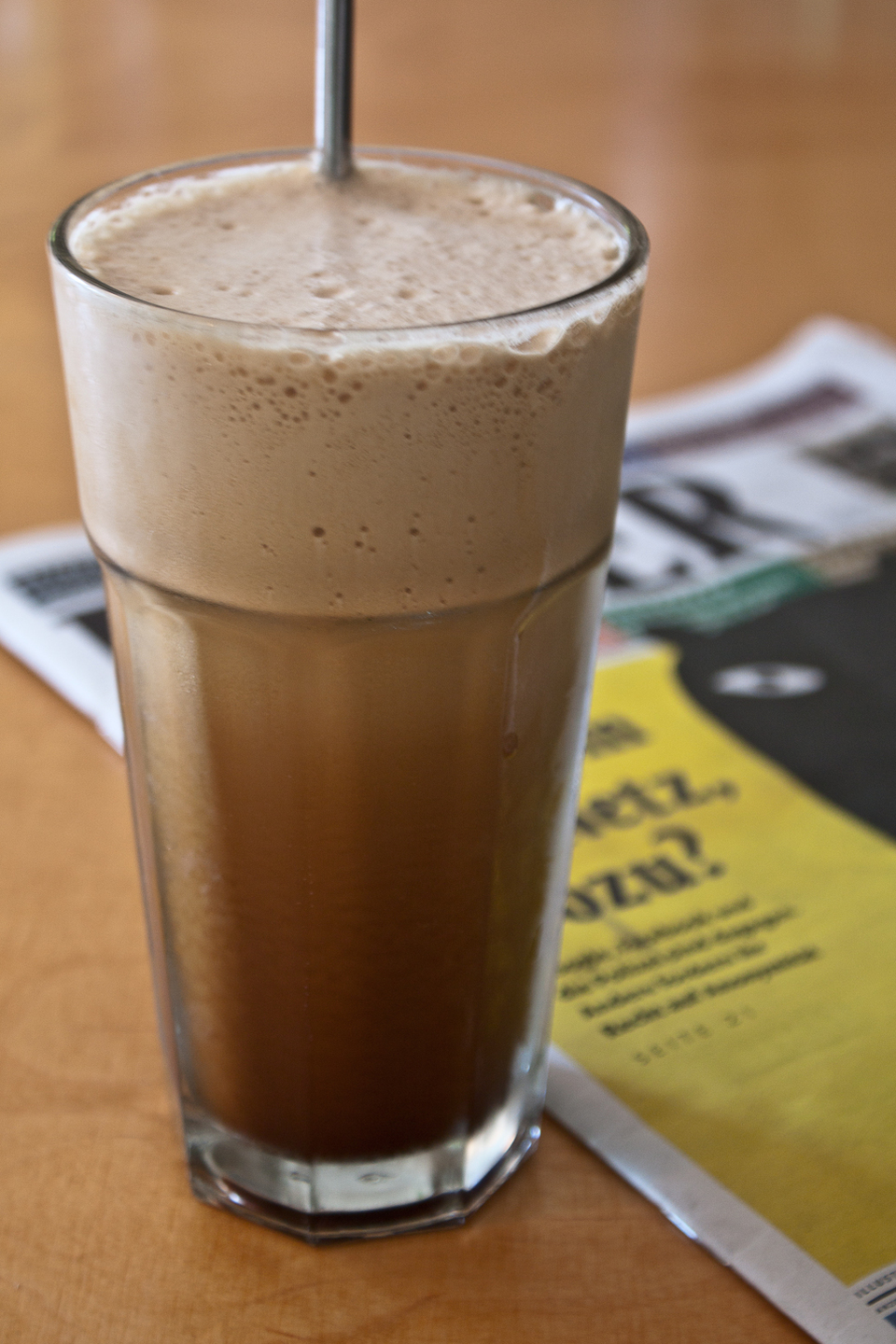
The Greek Frappé does not apologize for its origins; it simply exists, thick and foamy, everywhere under the Mediterranean sun. It's a coffee born not of third-wave precision, but of necessity and a resourceful employee, now a national institution. This isn't a pour-over or an espresso; it’s an instant coffee, meticulously frothed into an enduring ritual.
The Unplanned Genesis in Thessaloniki
The year was 1957. The setting: the Thessaloniki International Fair. Dimitris Vakondios, a Nescafé representative, was demonstrating a new instant chocolate drink for children, made by shaking it with milk in a cocktail shaker. He craved an instant coffee, but hot water was scarce. Resourceful, he took a sachet of Nescafé Classic, added some cold water, a few sugar cubes, and shook it vigorously in the same cocktail shaker. The result was a rich, frothy, cold coffee drink unlike any other. It was an accident, pure and simple, but it was perfect for the scorching Greek summer.
Nescafé, quick to recognize its potential, officially introduced the Frappé to the Greek market shortly thereafter. It wasn't long before it transcended a mere product and became a cultural phenomenon. Its simplicity and refreshing nature made it an instant hit, cementing its place in Greek daily life from bustling city squares to serene island beaches.
The Anatomy of a Perfect Frappé
A true Frappé is a balance of simple ingredients and precise technique. It starts with the right coffee: Nescafe Classic instant coffee is non-negotiable for traditionalists. The secret lies in the foam, and without a robust, stable, crema-like head, you're just drinking iced instant coffee. Here's how it's done:
- Coffee: 1 to 2 teaspoons of Nescafé Classic.
- Sugar: Optional, but traditionally part of the foam. Greeks order it: Sketo (plain, no sugar), Metrio (medium, 1-2 teaspoons sugar), or Glyko (sweet, 2+ teaspoons sugar).
- Water: A small splash of very cold water, just enough to dissolve the coffee and sugar, usually 15-30ml (about 1-2 tablespoons).
Combine coffee, sugar, and water in a shaker or a dedicated Frappé mixer. Shake or blend for 15-30 seconds until a thick, golden-brown foam forms. This foam should be dense and stable, not merely bubbly. Pour this foam into a tall, straight glass. Add 3-4 ice cubes. Slowly top with cold water, about 150-200ml, allowing the foam to rise and create distinct layers. A dash of evaporated milk is a popular addition, creating a creamier texture and a lighter color. Serve with a straw. The layered construction and the gradual melding of foam, coffee, and ice are part of the experience.
More Than a Drink: A Way of Life
The Frappé embodies the Greek ethos of siga siga — slowly, slowly. It's designed for leisurely consumption, enjoyed over hours of conversation in a café, by the sea, or during an afternoon break. You see it everywhere: students studying with a Frappé, friends catching up, business deals being made. It's an integral part of the social fabric.
This slow-sipping culture is depicted beautifully in films like Before Midnight (2013), where long, unhurried conversations unfold over drinks, often coffee, against the backdrop of the Greek landscape. The Frappé facilitates this pace; it's not a grab-and-go beverage. It demands you sit, you relax, you talk.
Mastering Your Home Frappé
Replicating the café Frappé at home is straightforward with the right tools. A dedicated handheld immersion blender or a cocktail shaker is essential for achieving that characteristic foam. Don't skimp on the cold water or the ice. Using a tall glass prevents spillover and allows for the visual layering that defines the drink. The key is agitation; instant coffee needs friction to build its creamy head.
If you're seeking to understand coffee beyond the espresso machine or the pour-over cone, embrace the Frappé. It is a testament to how accidental innovations, when perfectly aligned with cultural needs, can transcend their humble origins and become an unshakeable pillar of a nation's identity.
