
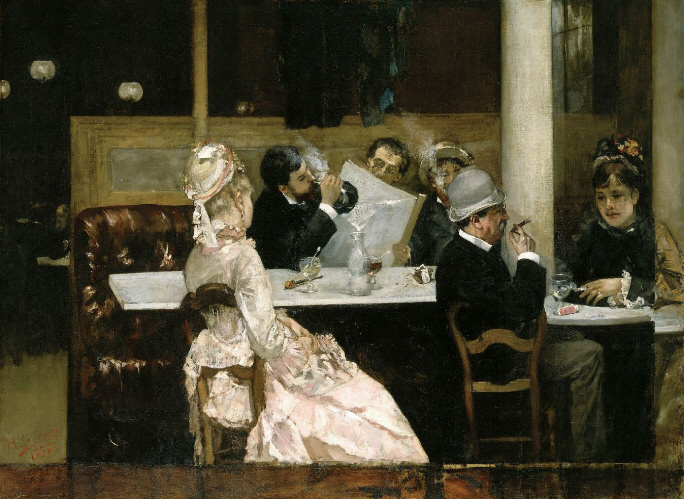
The air in a Parisian café hums with history and the scent of strong coffee. You step inside, seeking the romantic ideal you've seen in films like Amélie, but the menu can be a maze. Forget your Americanized lattes and oversized brews; Parisian coffee is a precise language of tradition, portion, and expectation. To truly drink like a local, you must know what an Express, a Noisette, and a Grand Crème actually are.
L'Express: The Heartbeat of Paris
Order an "Express," and you're asking for a shot of espresso. This is the bedrock of French coffee culture, a dark, potent, and swift affair. The typical Parisian espresso uses a blend often leaning heavily on Robusta beans for a dense, stable crema and a robust, slightly bitter profile that stands up well to milk or sugar. It’s a shot pulled quickly, usually from a dose of 7-8 grams of finely ground coffee, through a precise 9 bars of pressure, with water around 92-95°C. Expect a yield of approximately 30-35 milliliters, extracted in 25-30 seconds. It arrives in a delicate demitasse cup, barely holding more than a few sips.
This isn't a drink for lingering. The French consume their Express standing at the zinc bar, a quick jolt before they return to their day. It’s a moment of pure, undiluted coffee, designed for speed and clarity. To sit at a table costs more, and while you can, you’ll be missing the authentic, rapid-fire pulse of the bar. Think of Owen Wilson's character in Midnight in Paris, perpetually observing rather than fully participating, until he truly engages with the city's rhythms. The Express is that engagement.
La Noisette: A Touch of Milk, A Nod to Tradition
"Une noisette, s'il vous plaît." This is where things get interesting for the uninitiated. A noisette is not a hazelnut-flavored coffee; it literally means "hazelnut." It's an Express with a whisper of steamed milk, just enough to tint the coffee to the color of a hazelnut. We're talking 10-15 milliliters of milk, at most. It softens the espresso's edge without diluting its character. Like the Express, it's typically served in a demitasse cup, suggesting it's still a quick drink, but perhaps one savored slightly more, a gentle bridge between black coffee and a milk-forward beverage.
The beauty of the noisette lies in its restraint. It's a testament to the French respect for the coffee itself, where milk is an accent, not the main event. It allows the roast's qualities—those dark chocolate, perhaps smoky notes—to still shine through, merely rounded by a delicate layer of creamy texture. It’s an ideal afternoon pick-me-up, less aggressive than a straight espresso but still undeniably coffee.
Le Grand Crème: The French Daily Ritual
For those craving a larger, milkier experience, there’s the Grand Crème. But do not confuse it with an American latte or a Italian cappuccino; it has its own distinct identity. A Grand Crème typically features a double shot of espresso (or sometimes two singles) topped generously with steamed milk, served in a larger, often bowl-like cup. The milk is hot and silky, usually with minimal foam—it’s more about volume and warmth than airy froth. It’s often consumed with breakfast, perhaps with a croissant, reflecting a more leisurely, morning ritual.
Unlike the carefully constructed latte art you might find in specialty coffee shops, a Grand Crème is about comfort and quantity. It's less an art form and more a staple. It's the coffee you'd see Céline and Jesse sharing at a cafe terrace in Before Sunset, a companion to deep conversation rather than a quick grab-and-go. Ordering a "latte" in Paris might get you a glass of milk, a misunderstanding you can easily avoid by sticking to the local lexicon.
Navigating the Menu: Order with Intent
The best way to order in a Parisian café is with confidence and clarity. Avoid terms like "decaf latte" or "extra-hot cappuccino"; stick to the classics. An Express is a robust start. A Noisette offers a gentle balance. A Grand Crème provides comforting warmth. Remember that table service often comes with a higher price, a premium for the ambiance and a place to rest. Embrace the brisk efficiency of the bar, or settle into a corner and observe the intricate dance of Parisian life unfolding around you.
Understanding these fundamental orders not only grants you a better cup of coffee but also a deeper appreciation for Parisian culture. You're not just ordering a drink; you're participating in a tradition. Choose wisely, and savor the experience.
